
The transloading vs. intermodal decision usually comes down to one number: how many miles the ocean container has to cover before it’s back at the terminal. Past roughly 300 miles, transloading generally starts to show a cost saving. Past 600 to 1,000 miles, depending on the lane, that saving becomes substantial. Under certain circumstances, it’s worth doing on shorter runs too.
The threshold exists because the container has to come back, and measuring the move one way from the port hides half the trip. Shipping straight through on container drayage is the simpler option, right up until the return leg stops being free.
Key Takeaways
- Savings generally begin past about 300 miles and become substantial somewhere past 600 to 1,000, depending on the lane.
- Measure the round trip, not the delivery. An ocean container has to return to the terminal. A domestic trailer doesn’t. Counting only the outbound leg understates the commitment by half.
- Driver hours can decide it before mileage does. A round trip that can’t be completed inside a single duty day means a layover, and the container sits out overnight burning free time.
- Shorter lanes can still qualify. Dallas is a candidate in some cases, which is why the decision gets made lane by lane rather than from a distance table.
Same Word, Two Different Operations
Transloading means different things depending on who is saying it. In rail and bulk commodities, it usually describes moving product between railcars and trucks, or liquids and dry bulk between vessels. Chemical and frac sand operations use it that way all the time.
This piece means something narrower: containerized ocean freight, taken out of a marine container near the port and reloaded into a domestic trailer. Worth settling early, because the economics below only hold for that version.
For an import coming through Houston, that leaves two options.
Intermodal keeps the cargo in the same ocean container the whole way inland. The box comes off the vessel, goes onto a chassis or a railcar, and reaches the consignee still sealed. Nothing is handled in between.
Transloading moves the cargo into a domestic trailer and sends the ocean container straight back to the terminal. The freight continues on equipment that belongs to a trucking company rather than a steamship line.
The difference isn’t the cargo. It’s the equipment, and specifically whose it is and where it has to end up.
The Round-Trip Problem
An import container arrives with a limited window of free days to be collected, delivered, unloaded, and returned, tracked through Port Houston’s Lynx portal along with vessel schedules and holds. Deliver locally, and those runs are straightforward.
Send the same container out of state and the picture changes. Say the freight is going to Oklahoma. That container has to go all the way up to Oklahoma, get unloaded, and then come all the way back down to the port, because the steamship line needs its box returned.
This is where one-way thinking causes trouble. A shipper looking at a 400-mile delivery is really looking at an 800-mile commitment on equipment that’s on a clock. The delivery distance is half the number that matters.
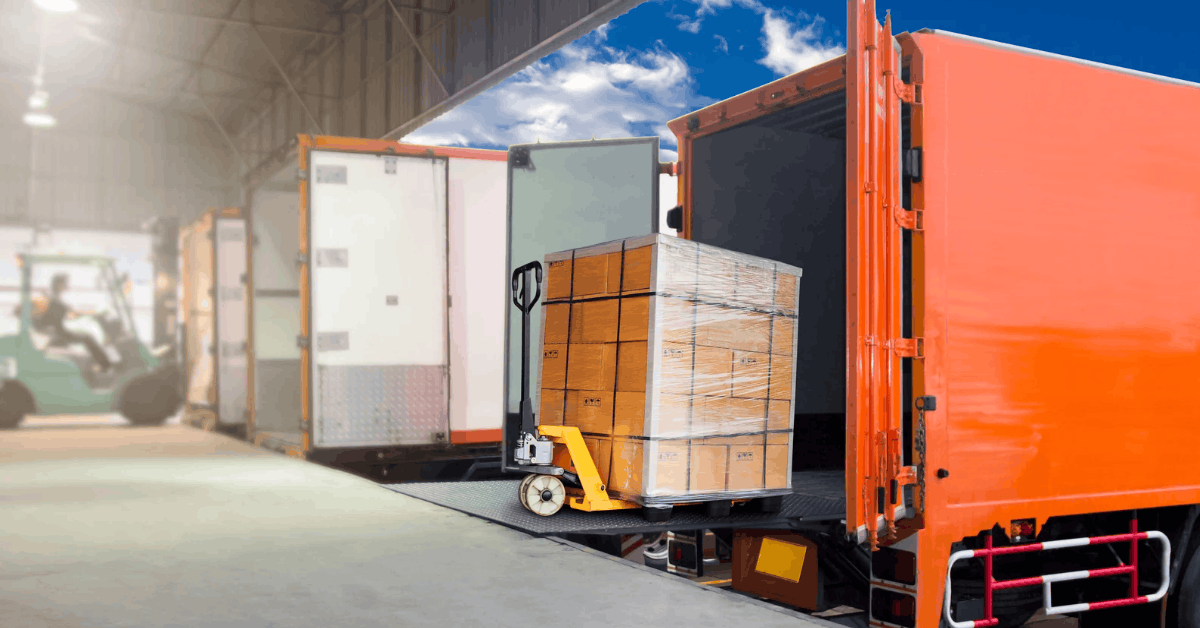
A transload breaks the loop. The container travels under ten miles to a warehouse near the port, the cargo is unloaded, and the container is back at the terminal well inside its window. The cargo goes back out in a trailer with a one-way destination, and that trailer doesn’t come back.
Where the Break-Even Happens
There are really three bands.
Under about 300 miles, the container can usually make the round trip comfortably, and the extra handling isn’t buying much. Shipping through is normally simpler.
Past roughly 300 miles, a cost saving starts to appear. The round trip has become long enough that removing it is worth the handling step.
Past 600 to 1,000 miles, depending on where the freight is going, the saving becomes substantial. At that distance, the return leg isn’t a detour, it’s most of the move.
The ranges are ranges for a reason. Lane, fuel surcharge exposure, equipment availability, and what the receiving end can handle all shift where the line falls. Anyone quoting a single universal break-even number isn’t describing real freight.
Driver Hours Can Settle It Before Mileage Does
Federal hours-of-service rules cap a property-carrying driver at 11 hours of driving after 10 consecutive hours off duty, inside a 14-hour on-duty window, with a 30-minute break required after 8 cumulative hours of driving.
That matters more than it first appears. A container round trip that can’t be finished inside one duty day means the driver stops and the container stops with them. The box spends the night out, and free time keeps running.
Houston to Chicago is about 1,082 miles one way, roughly 19.6 hours of driving. Round trip that’s 2,164 miles and close to 39 driving hours, which, under the 11-hour limit, is four driving days before anything is loaded or unloaded. The container is committed for the better part of a week. Transload instead, and the container covers about 20 miles, while the cargo moves north one way in a trailer that stays there.
Houston to Dallas is about 239 miles one way, roughly 4.2 hours of driving. That looks comfortably short until you count it properly. The round trip is 478 miles and about 8.4 driving hours, which triggers the mandatory 30-minute break and leaves a narrow margin inside the 14-hour window once the terminal turn and a live unload are added. If the gate runs slow or the dock runs long, the driver is out of hours, and the container sits overnight in Dallas.
That’s why Dallas can be a transloading candidate even though the mileage alone wouldn’t suggest it. The deciding factor isn’t the distance. It’s whether the container can get back inside both the driver’s clock and the steamship line’s.
What Else Moves the Math
Distance and driver hours set the baseline. Several other factors push a specific lane to one side or the other.
How the freight is loaded. Palletized cargo transfers quickly. Loose-loaded or floor-loaded freight takes longer and costs more to rehandle, which raises the distance at which a transload pays off.
The commodity itself. Some cargo shouldn’t be handled more than necessary. If rehandling introduces damage risk, that risk belongs in the comparison.
Weight and volume. A transload is also an opportunity to reconfigure a load. Freight packed for an ocean voyage isn’t always packed efficiently for a domestic trailer.
Timing and free time. If the container cannot reach its destination and return inside the free-time window, the comparison stops being about cost. It becomes about avoiding demurrage and detention charges, which is a different calculation with a different answer.
What the receiving warehouse can take. If the final customer is at capacity, a transload buys scheduling room that a container on a clock never would.
And the handling isn’t free. A transload adds a labor step and a facility. On a short lane, that cost has little to work against. On a long one, it’s small relative to the round-trip miles it eliminates.
When Shipping Through Is the Right Call
It frequently is, and a provider who recommends transloading on every lane isn’t looking at the freight.
Intermodal through makes sense on local and regional lanes where the container can turn inside a single duty day. It makes sense for cargo that shouldn’t be rehandled. It makes sense when the receiving facility is set up to unload a marine container and would rather take delivery once than coordinate two legs. And it makes sense when the free-time window is generous enough that the clock isn’t a factor.
Transloading vs. intermodal isn’t a question of which method is better. It’s more about where a particular lane sits relative to the break-even point, and what the freight itself will tolerate.
Running the Numbers on Your Own Lanes
Transloading is a tool for a specific problem: freight that has to travel inland on equipment that has to come back. Where that describes the lane, the savings are real, and they scale with the round trip. Where it doesn’t, the extra handling is a cost without a return.
Excargo runs transloading out of a warehouse under ten miles from the Port of Houston, which is what makes the container turn fast enough for the math to work. Whether it works for any given lane depends on the details above and on counting the miles the container actually travels, not the miles to the consignee.
If you want to know where your lanes fall against that break-even, send us the lane details, and we’ll walk through both options rather than quoting just one.
Frequently Asked Questions
What is the difference between transloading and intermodal?
Intermodal keeps the cargo in the same ocean container for the whole inland journey. Transloading transfers the cargo into a domestic trailer near the port and sends the ocean container back to the terminal. The difference is whose equipment carries the freight inland and whether that equipment has to return.
When does transloading save money?
Savings generally start to appear past roughly 300 miles and become substantial somewhere past 600 to 1,000, depending on the lane. Shorter runs can still qualify when the container can’t complete its round trip inside a single duty day.
Should distance be measured one way or round trip?
Round trip. The ocean container has to return to the terminal, so a 400-mile delivery is really an 800-mile commitment on equipment that’s on a clock. Measuring one way from the port understates the move by half and makes shorter lanes look less suitable than they are.
Why does transloading cut mileage?
Because an ocean container has to return to the terminal, and a domestic trailer doesn’t. Shipping a container through to a distant consignee means running it out and back. Transloading keeps the container near the port and sends the cargo onward one way.
Does transloading help with free time?
Yes, and sometimes that matters more than the mileage. A container that travels only a few miles to a transload facility can be unloaded and returned well within its free-time window, avoiding demurrage and per diem on lanes where a direct delivery could not turn in time.
About the Author
Michael Sager is a Sales Manager at Excargo Services, where he works across both business development and warehouse operations. Drawing on seven years of industry experience, including warehouse management, transloading, inventory control, and shipping and receiving, he works closely with businesses moving import cargo through the Port of Houston. His articles focus on transloading, warehousing operations, and the practical side of getting import cargo off the port and on its way.